#Industry News
One Minute to Understand the Principle of Arterial Pressure Formation
One Minute to Understand the Principle of Arterial Pressure Formation
The human blood circulation system is just like a highway network, transporting blood and nutrients to all parts of the body-ranging from first-class to third-class highways. Different highways have different functions, so they vary in width and pavement materials. Human blood vessels work in the same way. To safely navigate this complex vascular network, medical professionals rely on an Endovascular Intervention Trainer to practice procedures before performing them on actual patients.
Structural Composition and Function of Arteries
Before learning the principle of arterial pressure formation, we first need to understand the structural composition of arteries.Arteries consist of three layers: the intima, media and adventitia. The thickness of each layer varies according to the different functions of arteries at all levels.
The arterial intima is about 100-130μm thick, composed of simple squamous epithelium with a smooth surface and low friction. The media is relatively thick, around 500μm, formed by interlaced elastic fibers and smooth muscle. It determines the core functional characteristic of the aorta - elasticity. It buffers the strong pressure generated by cardiac systole and rebounds elastically during cardiac diastole to keep blood flowing directionally. This ensures blood pressure does not drop after long-distance circulation, delivering blood throughout the whole body.
The adventitia is made of longitudinal collagen fibers on the outer side. An external elastic lamina connects it to the media with no obvious boundary between the two layers. The adventitia prevents excessive expansion of elastic tissues in the media, keeping arterial blood pressure within a normal fluctuation range. If the adventitia is damaged, the media may bulge outward under internal vascular pressure, potentially leading to an aortic aneurysm in severe cases.
Formation of Arterial Blood Pressure
Blood pressure refers to the lateral pressure exerted by blood on the vessel wall. It is divided into arterial blood pressure, capillary blood pressure and venous pressure. The blood pressure we normally measure specifically refers to arterial blood pressure. Four basic conditions are required to maintain normal arterial blood pressure:
1.Full blood filling in the circulatory system: The prerequisite for generating arterial pressure.
2.Cardiac systolic ejection: The driving force for blood flow and blood pressure formation, constituting systolic blood pressure.
3.Peripheral resistance: Resistance to blood flow from small arteries and arterioles, mainly caused by the sudden narrowing of vascular diameter.
4.Elasticity of large blood vessel walls: Arterial walls convert part of the kinetic energy from cardiac systole into potential energy, which is released during diastole to maintain blood pressure and continuously propel blood flow, serving as a key component of diastolic blood pressure.
The formation of arterial blood pressure can be divided into two stages:
First stage: Cardiac systole
The heart contracts and ejects blood into the arteries. With full blood filling in the circulatory system and peripheral resistance, arterial pressure rises rapidly to its peak - this is systolic blood pressure. At this moment, one-third of the blood flows to peripheral tissues, while the remaining two-thirds is temporarily stored in the aorta and large arteries. The great elasticity of arterial vessel walls accommodates this volume, converting part of the kinetic energy from cardiac ejection into potential energy stored in the vessel wall.
Second stage: Cardiac diastole
The aortic valve closes during diastole, preventing blood from flowing back into the left ventricle. The elastic fibers stretched during systole recoil, narrowing the arterial lumen. Stored potential energy is converted back into kinetic energy, pushing the reserved blood toward peripheral vessels and keeping aortic pressure at a relatively high level. The measured pressure at this time is diastolic blood pressure.
Thanks to the function of elastic reservoir vessels, the intermittent blood ejection of the left ventricle is converted into continuous pulsatile blood flow in arteries, maintaining stable lateral pressure on blood vessel walls.This is the complete principle of arterial pressure formation.
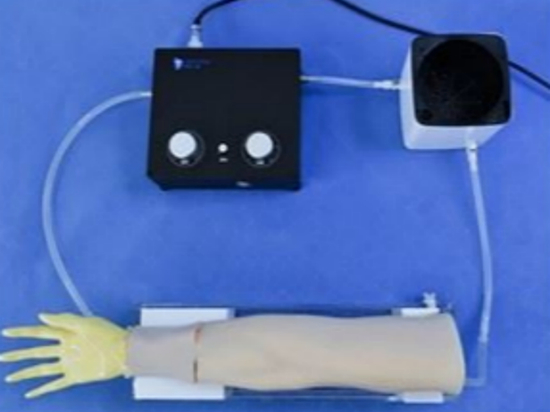
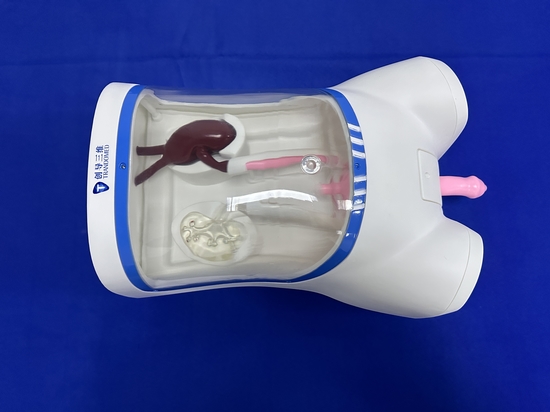
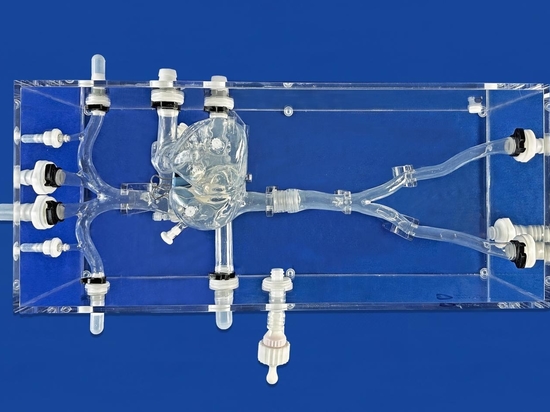
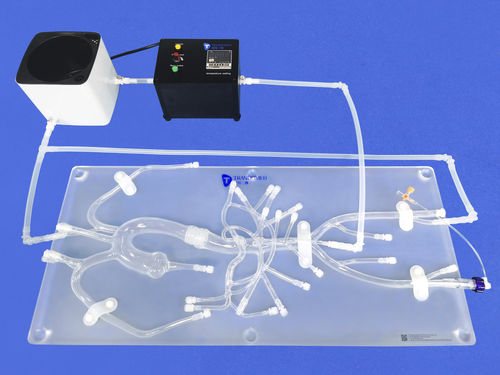
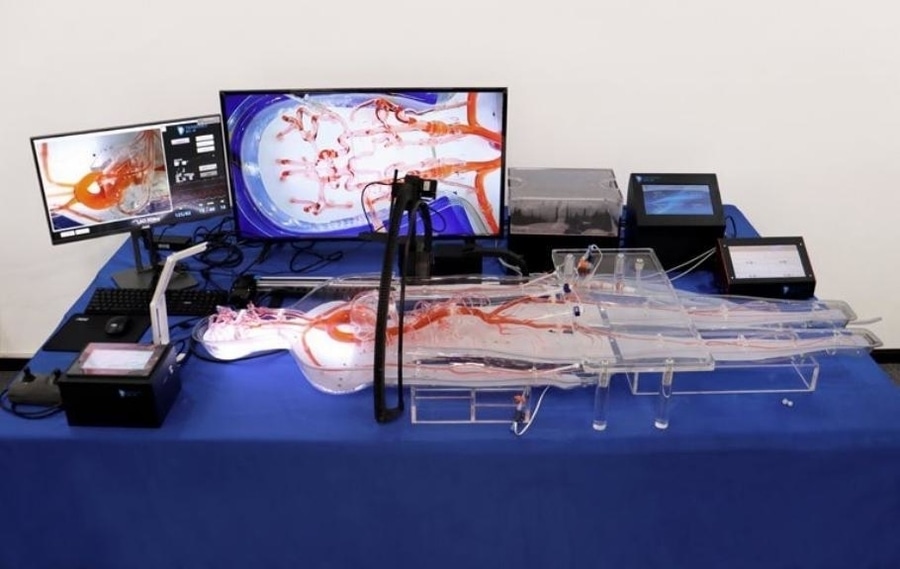
If you still find it difficult to understand intuitively, you can learn through a silicone blood vessel simulation system, such as an Endovascular Intervention Trainer, which provides hands-on experience with these physiological concepts.