#Industry News
Endoscopic Simulators Bridging the Technical Gap for Doctors
Endoscopic Simulators Bridging the Technical Gap for Doctors
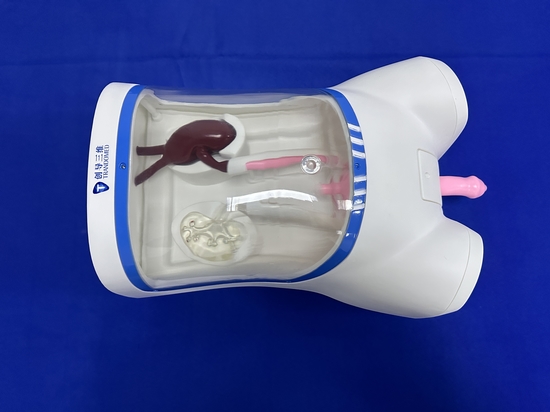
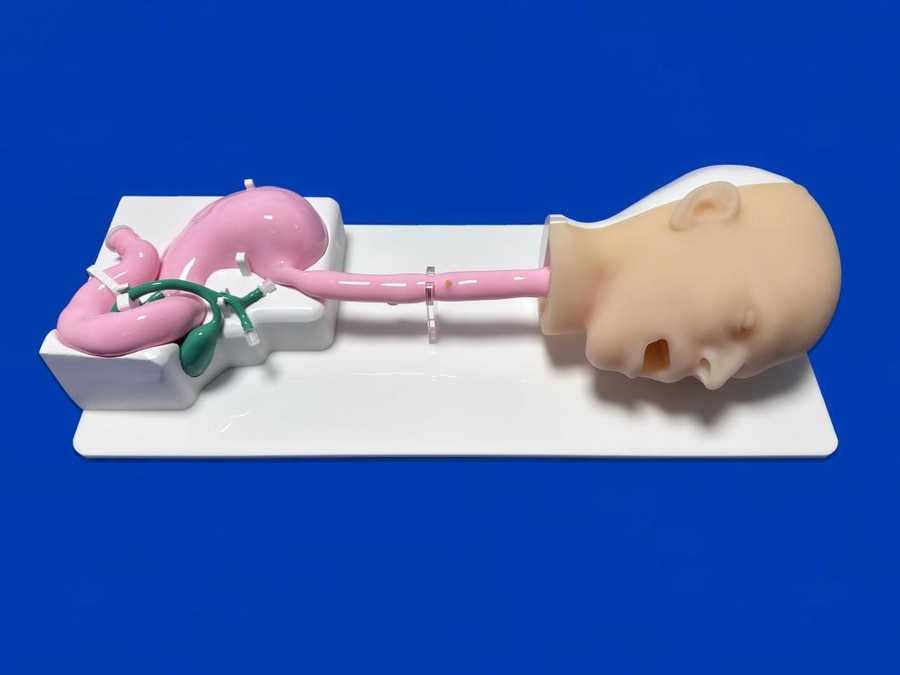
Many doctors have experienced this on their journey of learning endoscopy: patients can't wait, opportunities are fleeting, and the feel for the procedure is hard to find. On one hand, there's the urgent desire to improve skills; on the other, there's the unavoidable pressure of clinical practice. How can one safely, efficiently, and cost-effectively bridge the gap between "knowing" and "doing"? Simulator training is a good option. To this end, Creative 3D has launched a digestive endoscopy training simulator (from Creative 3D) that allows for practice of gastroscopy, ESD, and ERCP Simulator.
Two key features of this simulator:
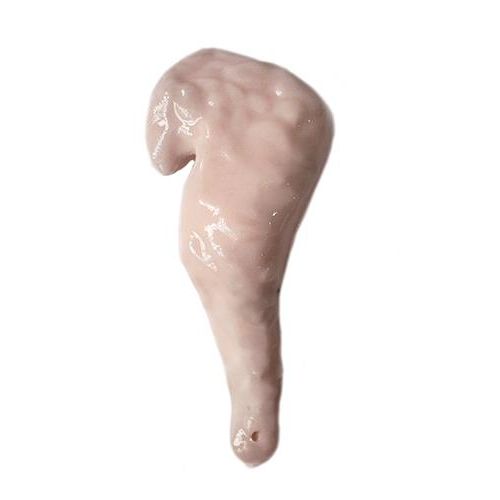
1. Special silicone material, a balance between simulation and durability. Many training models on the market are either too rudimentary, resembling plastic toys, or pursue extreme simulation at exorbitant prices. This simulator uses a specially formulated silicone material—possessing both the flexibility and elasticity close to human tissue and the durability suitable for teaching. This simulator can not only mimic anatomical routes but also present typical manifestations of common endoscopic lesions. The model cavity needs to be filled with lubricant, and the endoscope itself should be thoroughly coated with lubricant to avoid noticeable dryness and difficulty in insertion during operation. Once lubrication is adequate, the simulation accuracy is greatly enhanced, allowing for a more realistic mimicking of the resistance and gliding sensation under a real endoscope.
2. Hand feel is the "soul" of endoscopic training.
Operating on this simulator, you can clearly experience:
① Insertion route: From the mouth and pharynx to the esophagus, from the cardia, fundus, body, angle, pylorus, and finally to the duodenum—this is a complete standard endoscopic route.
② Field of view adjustment: Correcting the field of view, adjusting clarity, and adjusting the distance to the lesion—each step requires "finding the angle and adjusting the knobs" just like with a real patient.
③ Disease observation: In addition to practicing operational skills, you can also identify the endoscopic manifestations of common diseases such as esophagitis, gastric polyps, and gastric ulcers.
④ The model can also be used for simple ERCP insertion practice—although it cannot replace live surgery, it is very beneficial for understanding insertion angles, adjustment directions, and endoscope placement.
Of course, no simulator can achieve a 100% perfect simulation, especially in terms of the feel and the differences between the simulator and reality in certain areas. But its greatest significance lies precisely in building a "reasonable, appropriate, and phased transition" between beginners and actual patient practice. It allows novices to "make mistakes" and "find the feel" before truly facing patients.