#Industry News
How Cardiac Vascular Models Facilitate Clinical Training in Interventional Cardiology
How Cardiac Vascular Models Facilitate Clinical Training in Interventional Cardiology
1. Industry Background: Bottlenecks in Traditional Interventional Cardiology Training
The rapid advancement of interventional cardiology has propelled minimally invasive techniques such as coronary stent implantation and balloon angioplasty to the forefront of coronary heart disease treatment. Nevertheless, these delicate procedures performed inside thin, fragile, dynamically beating coronary arteries impose extremely high skill requirements on physicians. Restricted by patient safety and medical ethics, conventional training modes fail to deliver sufficient, standardized hands-on practice opportunities. To address this challenge, Trandomed, a professional manufacturer of medical simulation models, has developed its high-fidelity coronary artery simulation model, establishing an innovative clinical training and testing platform for interventional device verification and physician skill cultivation.
2. Full-Vessel Path Simulation: Complete Anatomical Recurrence of PCI Access Routes
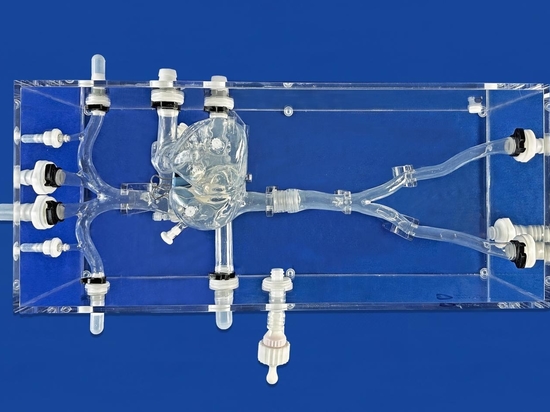
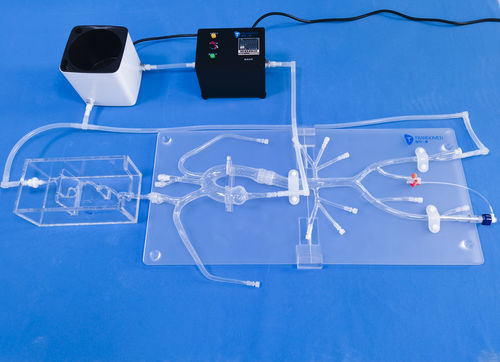
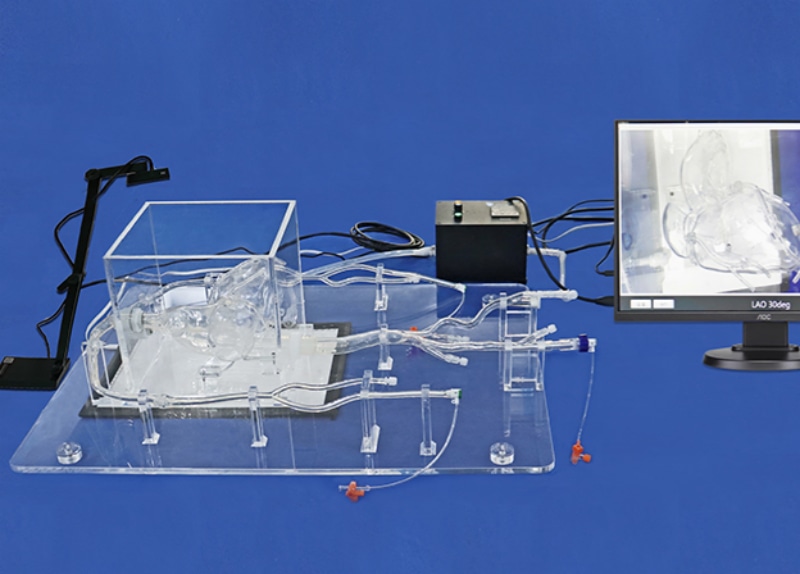
Distinct from simplified models that only replicate local target vessels, Trandomed’s cardiac vascular model adopts a systematic full-path design concept. Instead of displaying coronary arteries in isolation, it fully reconstructs the entire blood flow channel traversed by surgical devices during interventional operations, encompassing coronary arteries, thoracic aorta, abdominal aorta, iliac arteries and femoral arteries. This structure precisely matches the transfemoral access route most widely adopted in clinical Percutaneous Coronary Intervention (PCI).
Starting from femoral artery puncture, trainees practice advancing and manipulating guidewires and catheters through iliac, abdominal and thoracic arteries, before selectively cannulating the left or right coronary artery to reach lesion sites. Equipped with this integrated anatomical pathway, practitioners systematically master fundamental skills including vascular puncture, device delivery and control, aortic arch navigation, and selective cannulation of coronary ostia within a highly realistic environment. Full-path simulation delivers irreplaceable training value for building accurate spatial awareness, understanding physiological vascular curves and branching angles, and preventing complications such as vascular dissection.
3. Transparent Visualization: From Tactile Sensation to Direct Visual Observation
A core highlight of this model lies in its soft, transparent material composition, which revolutionizes the training experience. In traditional opaque models or live patient procedures, physicians rely mainly on 2D fluoroscopic X-ray imaging and tactile feedback to navigate instruments. The transparent structure adds intuitive three-dimensional visual feedback. Operators can directly observe the real-time position, movement, vessel wall contact, and shape deformation of guidewires, catheters, balloons and stents inside lumens, especially when navigating tortuous segments.
This intuitive, visible operation solidifies physicians’ comprehension of the dynamic interaction between instrument manipulation and vascular anatomy. Abstract operational techniques become tangible, enabling quick correction of faulty movements and optimized surgical strategies. Transparent design partially transforms interventional procedures from an experience-dependent “black box” process into an observable, analyzable “clear box” practice, significantly lowering learning barriers for new practitioners.
4. Modular Lesion Design: Progressive Training from Basic Skills to Complex Cases
To accommodate diverse, complex clinical pathologies, the model features an advanced modular framework with interchangeable modules simulating coronary stenosis and calcification. Replaceable branching components including left anterior descending artery, diagonal branches, left marginal branches and right marginal branches are also provided, enabling fully customizable, tiered training programs.
Beginners start on lesion-free standard vasculature to perfect device delivery and path navigation. Once foundational skills are solidified, interchangeable lesion inserts with varying stenosis severity and calcified textures introduce high-difficulty scenarios. Physicians then practice crossing lesions, precise balloon positioning and dilation, and accurate stent deployment. This seamless progression from normal vasculature to diseased segments, from simple to complex cases, allows a single model to satisfy training demands for physicians across all career stages.
5. Integrated Platform Linking Device Innovation and Clinical Training
This cardiac vascular model supports performance testing, functional demonstration and hands-on training for coronary guidewires, catheters, stents, rotational atherectomy systems and other interventional devices, serving as a vital bridge connecting the medical device industry and clinical practice.
For medical device developers, it delivers a stable, comparable, highly realistic simulated environment to verify deliverability, pushability, radiopacity and vessel interaction of innovative products, accelerating research and iteration cycles. For marketing and academic promotion, it acts as an intuitive demonstration tool showcasing superior device performance. For clinical education, it forms the foundation of risk-free, standardized training for coronary stenting, balloon angioplasty and related interventions. Its all-in-one value for testing, demonstration and training embodies the systematic solutions offered by specialized medical model manufacturers.