#Industry News
Real-Time P-V Loop Generation: Addressing the Key Challenges in IABP/LVAD Development and Validation
Real-Time P-V Loop Generation: Addressing the Key Challenges in IABP/LVAD Development and Validation
During the development of ventricular assist devices (VADs), the realism of in-vitro simulation has always been a critical factor determining whether a product can successfully transition from laboratory research to clinical application.
Whether optimizing IABP algorithms or evaluating IMPELLA flow performance, development engineers often face a common challenge: the lack of an intuitive, high-precision, and clinically relevant physiological feedback loop.
Addressing the Core Challenges in VAD Development and Validation with Real-Time P-V Loop Simulation
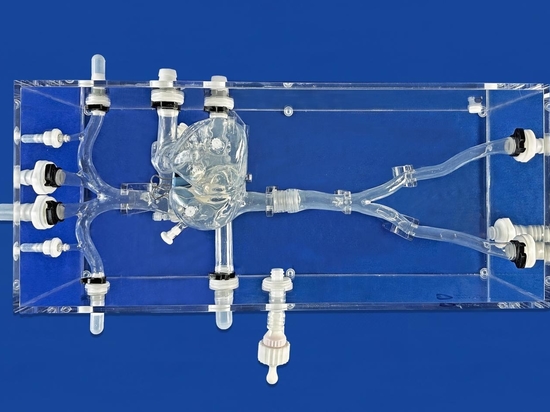
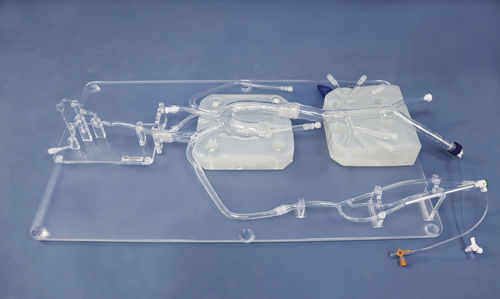
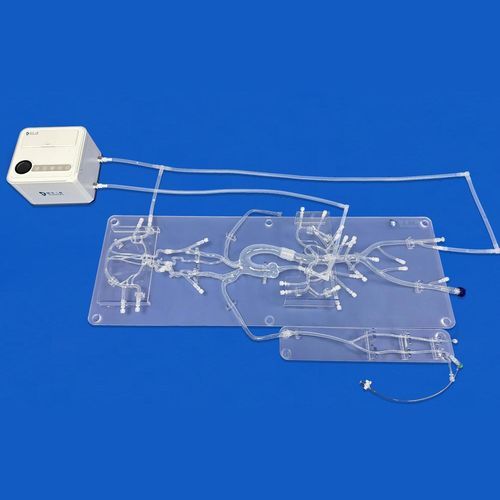
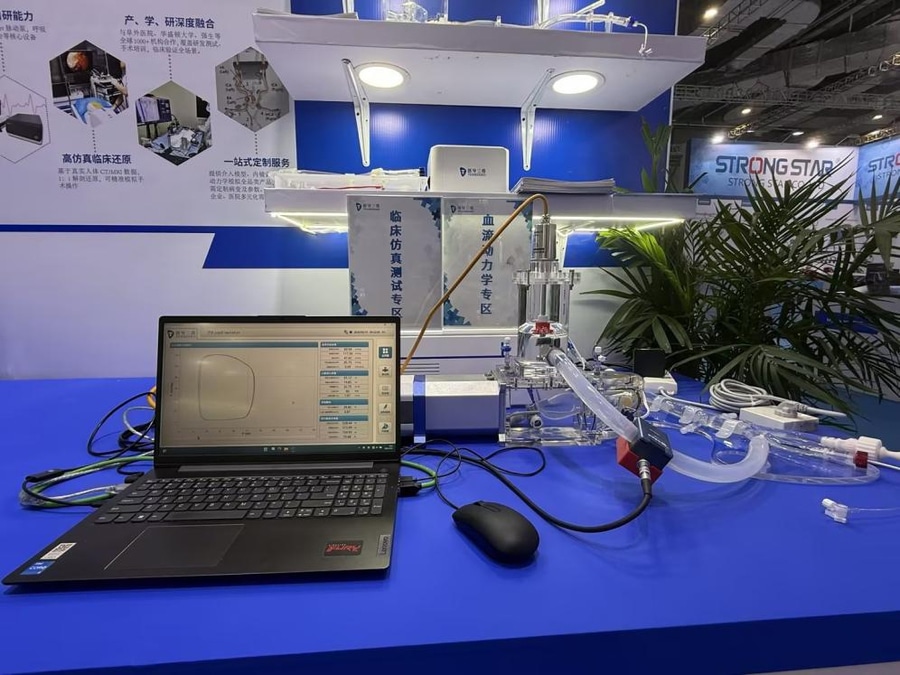
To overcome this industry challenge, Trando 3D Medical has launched the Ventricular Assist Device (VAD) Validation System — a Physiological Left Ventricular P-V Loop Real-Time Waveform Simulation and Testing Platform.
More than just a simulator, this system is a comprehensive hemodynamic validation solution specifically designed for VAD research and development engineers.
Why Should VAD Development Focus on the Left Ventricular P-V Loop?
The left ventricular pressure-volume loop (P-V Loop) is considered the gold standard for evaluating cardiac mechanics and hemodynamic performance.
Algorithm Optimization:
Only by observing real-time changes in P-V loop area (stroke work) can engineers accurately evaluate and optimize counterpulsation timing and control algorithms.
Safety Validation:
Simulating P-V loop changes under extreme pathological conditions, such as heart failure and hypertension, is essential for evaluating device stability and performance reliability.
Core Advantages
1. Physiological-Level Simulation: Over 90% Clinical Correlation
The system integrates a high-precision pulsatile pump with advanced control algorithms to ensure that simulated waveforms closely match clinical hemodynamic haracteristics.
Real-Time P-V Loop Generation:
During each pulsatile pump cycle, pressure (P) and volume (V) data are continuously collected and synchronized to dynamically generate real-time P-V loop waveforms.
Clinical Scenario Simulation:
Users can switch between “normal heart” and “heart failure heart” modes with one click, enabling clear comparison of hemodynamic changes before and after device intervention.
This allows researchers to evaluate VAD performance under different physiological conditions and obtain more clinically meaningful validation data.
2. High-Precision Data Acquisition: Providing Reliable Evidence for Regulatory Submission
During the medical device registration process, the traceability and reliability of simulation data are critical.
Sensor Accuracy:
The system supports a pressure measurement range of 0–300 mmHg, with overall flow measurement accuracy reaching 2%.
Documentation Support:
Raw waveform data exported from the system can be directly used as key reference data for device performance verification and bench testing. This helps reduce additional correction procedures and supports a more efficient regulatory approval process.
3. Hemodynamic Evaluation: Visualizing Combined Effects
The system integrates an ultrasonic flow sensor to accurately monitor aortic flow and velocity changes.
Synergistic Analysis:
It can reproduce and evaluate the flow augmentation effects generated by the interaction between the pulsatile pump and assist devices.
Trigger Logic Validation:
The system supports dual-mode inflation and deflation triggering, enabling better alignment with the clinical triggering logic of IABP consoles and improving the accuracy of device performance evaluation.
4. Supporting the Entire VAD Development Lifecycle
Early Development Stage:
Provides a cost-effective and efficient platform for algorithm iteration, parameter optimization, and functional verification.
Regulatory Submission Stage:
Generates high-confidence in-vitro testing data and validation reports that meet the requirements of medical device evaluation.
Clinical Promotion Stage:
Provides healthcare professionals with immersive demonstration capabilities, realistically reproducing the hemodynamic effects and operational principles of assist devices.
Trando 3D Medical VAD Validation System — Advancing Hemodynamic Simulation for Next-Generation Cardiac Assist Device Development.
Providing Reliable Data for Development and Enabling More Accurate Validation
As one of the few technology platforms worldwide capable of real-time physiological P-V loop simulation, Trando 3D Medical is committed to providing a solid data foundation for the development, validation, and optimization of ventricular assist devices.
By integrating advanced hemodynamic simulation technology with precise data acquisition and analysis capabilities, the system helps researchers achieve more reliable in-vitro testing results and improve the efficiency of VAD development.
If you require more details about in-vitro testing solutions for ventricular assist devices, please feel free to contact us at [email protected].
Trando 3D Medical can provide customized hemodynamic simulation solutions tailored to your specific research and validation requirements.