#Product Trends
Reverse & Paradoxical Techniques in Endoscopic Practice
Reverse & Paradoxical Techniques in Endoscopic Practice
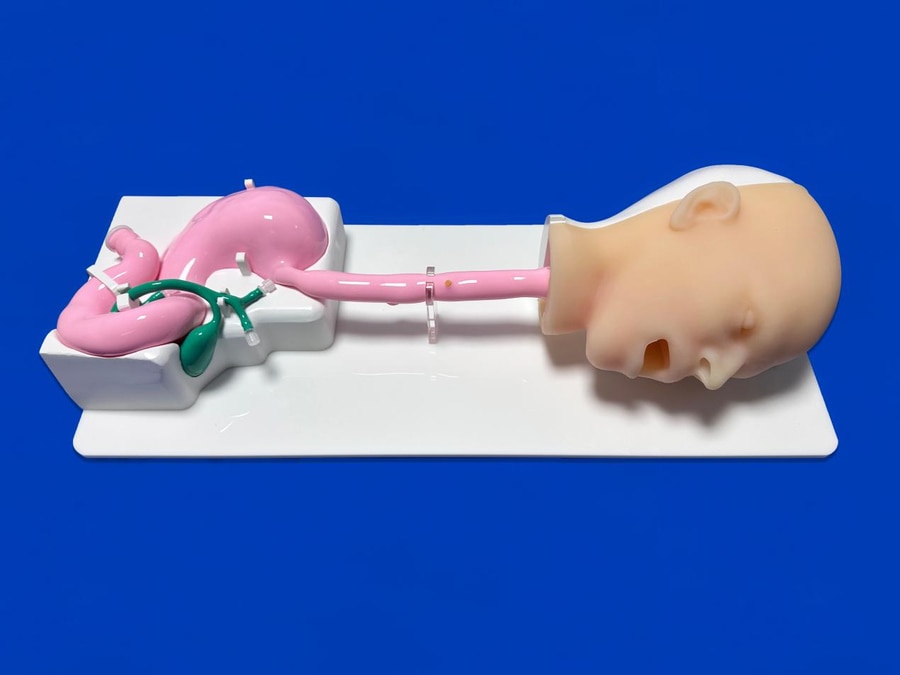
Many junior endoscopists struggle with typical blind spots in routine gastroscopy due to conventional intuitive operation habits, where reverse and flexible skills become the key to smooth intubation and cavity passing. A common dilemma is visible pharyngeal cavity but failed advancement with straight pushing. The core solution is reverse swinging penetration: fully release all adjustment knobs to keep the endoscope tip soft and flexible, then swing the scope gently to slide into the esophagus along the natural pharyngeal radian, instead of rigid forward compression. Another spatial paradox lies in the duodenal superior angle and descending part, where the visual distance and orientation completely contradict daily spatial intuition. Operators must abandon inertial judgment, adopt tentative and soft manipulation, and adapt to the reversed anatomical orientation. Additionally, retroflex manipulation is an indispensable core technique for ESD. Proficient reverse visual operation is essential for handling lesions in the gastric fundus, posterior wall and cardia areas, which determines the safety and completeness of lesion dissection.
The endoscopic diagnosis of early gastric cancer follows a totally counter-intuitive logical paradigm, overturning most clinicians’ first-line judgment habits. The biggest diagnostic trap is defining early cancer merely by abnormal mucosal vessels and surface structures. The core paradox rule is that lesion boundary is the primary diagnostic criterion, while vascular and structural changes are only auxiliary evidence. Clinically, tiny lesions with distinct and sharp boundaries are highly suggestive of early gastric cancer. In contrast, lesions with multi-gradual changing boundary lines (MCDL) are mostly benign non-cancerous lesions, which is completely opposite to conventional cognition. Standardized diagnosis must follow a reversed priority sequence: observe lesion boundary first, evaluate mucosal background color changes second, and finally assess surface microstructure and microvascular morphology. This reverse thinking effectively avoids overdiagnosis and missed diagnosis caused by single-factor judgment.
ERCP is the most typical endoscopic operation relying on paradoxical manipulation, covering angle adjustment, intubation path and visual focus conversion. In terms of angle control, the left-right swing direction of the endoscope is completely reversed from visual intuition. The process of straightening the scope body is essentially a reverse facial adjustment, requiring operators to form independent muscle memory through decomposed distance, axial and azimuth training. For intubation skills, conventional short-distance straight intubation is not applicable for complex cases. Operators must master paradoxical paths including long-distance intubation, deep intubation and loop-expanding intubation. When conventional angles fail, flexible combination of bow bending needle alignment, fine knob adjustment and scope rotation can complete intubation in awkward postures. Moreover, refined ERCP operation requires a core focus shift: abandon the habit of centering the visual field, and take the probe head trajectory and wire movement as the first observation priority, ensuring precise operation under narrow or offset visual conditions.
In summary, excellent endoscopic diagnosis and operation are not dependent on conventional inertial thinking, but on skilled mastery of various reverse and paradoxical techniques. From flexible gastroscopy intubation and retroflex operation, reversed early cancer diagnostic logic, to ERCP’s anti-intuition angle adjustment and intubation strategies, all core skills break routine operation cognition. Mastering these paradoxical rules can effectively improve operation success rate, reduce surgical risks, and enhance the accuracy of early lesion diagnosis, which is a necessary upgrade for every advanced endoscopist.