#Product Trends
Losing Tactile Sensation in Duodenal Papilla Cannulation? This ERCP Model Restores Your Surgical Feel
Losing Tactile Sensation in Duodenal Papilla Cannulation? This ERCP Model Restores Your Surgical Feel
The Common Dilemmas of Clinical ERCP Training
In the field of gastrointestinal endoscopy, Endoscopic Retrograde Cholangiopancreatography (ERCP) is widely regarded as the “jewel in the crown” of minimally invasive digestive procedures. Mastering this sophisticated technique demands not only innate clinical aptitude but also extensive, long-term clinical practice and systematic training. Despite its critical role in the diagnosis and treatment of biliary and pancreatic diseases, ERCP poses tremendous challenges for endoscopists, especially junior physicians, who frequently encounter common bottlenecks in clinical training and daily operations.
The first prevalent dilemma is inaccurate positioning. The duodenal papilla features a concealed anatomical location and diverse individual variations, making it extremely difficult for novice operators to quickly locate the correct surgical entrance. Second, insufficient practical training opportunities hinder skill improvement. Grassroots medical institutions often lack adequate clinical ERCP cases, leaving young doctors with few chances to perform hands-on operations and accumulate clinical experience. Third, skill regression is a common issue for seasoned physicians. Even experienced endoscopists may gradually lose the subtle and precise tactile sensation of intubation after a period of inactivity, affecting the stability of clinical operations.
High-precision ERCP Simulation Trainer: Restoring Real Clinical Anatomy
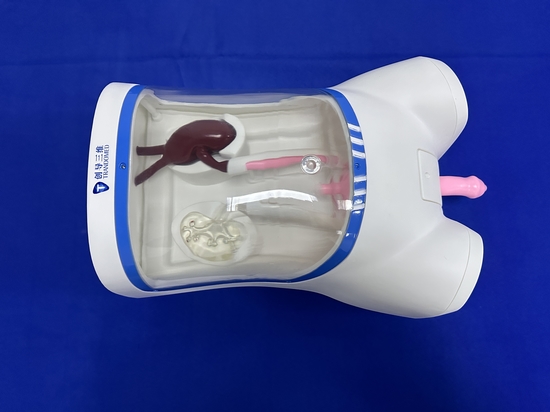
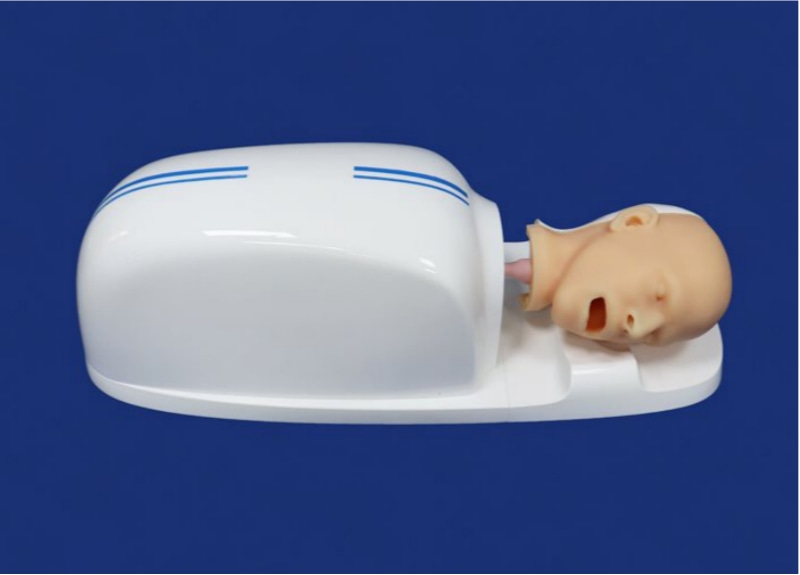
To solve these pain points in ERCP teaching and skill training thoroughly, Trandomed has launched a high-precision ERCP simulation trainer, which brings authentic clinical surgical scenarios to daily training scenarios and achieves far more than simple simulation through 1:1 real human anatomical restoration.
1. 1:1 Real Human Anatomical Reconstruction
Different from traditional simplified conceptual simulation models, this trainer is developed based on real human CT and MRI data via professional three-dimensional reconstruction technology. It achieves a strict 1:1 anatomical restoration, perfectly reproducing every physiological bend, mucosal fold and tissue structure of the human esophagus, stomach and duodenum. In particular, it highly restores the complex physiological curvatures and internal running paths of the common bile duct and pancreatic duct, presenting real and delicate human anatomical features for standardized training.
2. Accurate Duodenal Papilla Positioning Training
Duodenal papilla cannulation is the primary and most critical step for successful ERCP surgery. This model finely replicates the complete anatomical morphology of the major duodenal papilla. It allows physicians to repeatedly practice endoscope insertion, angle adjustment and entry point positioning in a simulated environment, effectively solving the clinical problems of difficult localization and inaccurate alignment during cannulation.
3. Tactile Memory Maintenance to Avoid Skill Regression
Professional ERCP practitioners need to complete 20 to 50 clinical cases annually to maintain stable surgical tactile sensation. Serving as a reliable “tactile preservation tool” for endoscopists, this model supports regular and repeated hands-on training regardless of clinical case volume. Continuous cannulation and angiography drills help operators solidify operational techniques into instinctive muscle memory, eliminating operational tension and instability during formal clinical surgery.
4. High-fidelity Angiography & Immersive Simulation
Additionally, the model supports high-fidelity pancreaticobiliary angiography training. The resistance and passing feel of guide wires inside the ducts are highly simulated, providing an immersive and realistic surgical experience. It enables physicians lacking clinical practice opportunities to accumulate valuable simulated combat experience efficiently.
Core Advantages and Product Launch
What makes Trandomed’s ERCP model stand out is its ultra-realistic tactile feedback and authentic anatomical structure. It acts as a professional guide for novice physicians and an effective polishing tool for experienced practitioners. This training model greatly flattens the steep learning curve of advanced ERCP techniques, allows medical staff to continuously polish and consolidate professional skills through daily training, and provides solid technical support for standardized and safe clinical ERCP operations. The upgraded new version of the ERCP simulation model is about to be launched. Welcome industry practitioners and medical institutions to contact Trandomed for consultation and cooperation.