#Industry News
Say Goodbye to “Searching for a Needle in a Haystack” in AVS Procedures: A High-Fidelity Training Model Makes Adrenal Venous Sampling Easier to Master The Challenges and Difficulties of AVS Procedures
Say Goodbye to “Searching for a Needle in a Haystack” in AVS Procedures: A High-Fidelity Training Model Makes Adrenal Venous Sampling Easier to Master The Challenges and Difficulties of AVS Procedures
In the subtype diagnosis of primary aldosteronism (PA), adrenal venous sampling (AVS) is internationally recognized as the gold standard. However, due to its high technical difficulty and the limited interventional experience of many trainees, mastering this procedure remains a significant challenge.
Challenge 1:
The adrenal veins are extremely small, with complex anatomical structures and multiple variations in venous openings. Precisely positioning and engaging the catheter into the target vein can feel like “searching for a needle in a haystack.”
Challenge 2:
Operators must rely on DSA imaging guidance to determine catheter positioning and vascular anatomy. The procedure is highly experience-dependent, resulting in a long and demanding learning curve.
Clinical Training Challenge:
Early-stage practice on real patients involves high procedural risks and psychological pressure. Therefore, how to train skilled AVS operators safely and efficiently has become a major challenge in clinical education.
Trando 3D Medical Breakthrough: Redefining AVS Training Standards
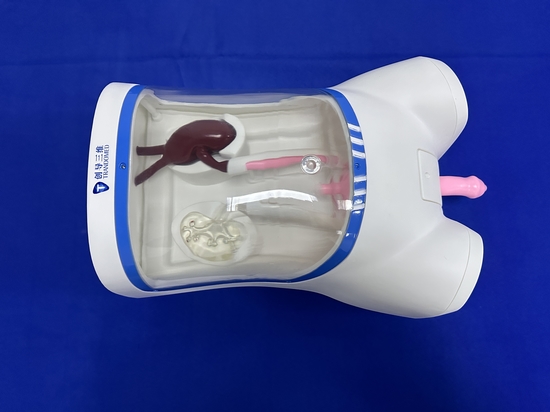
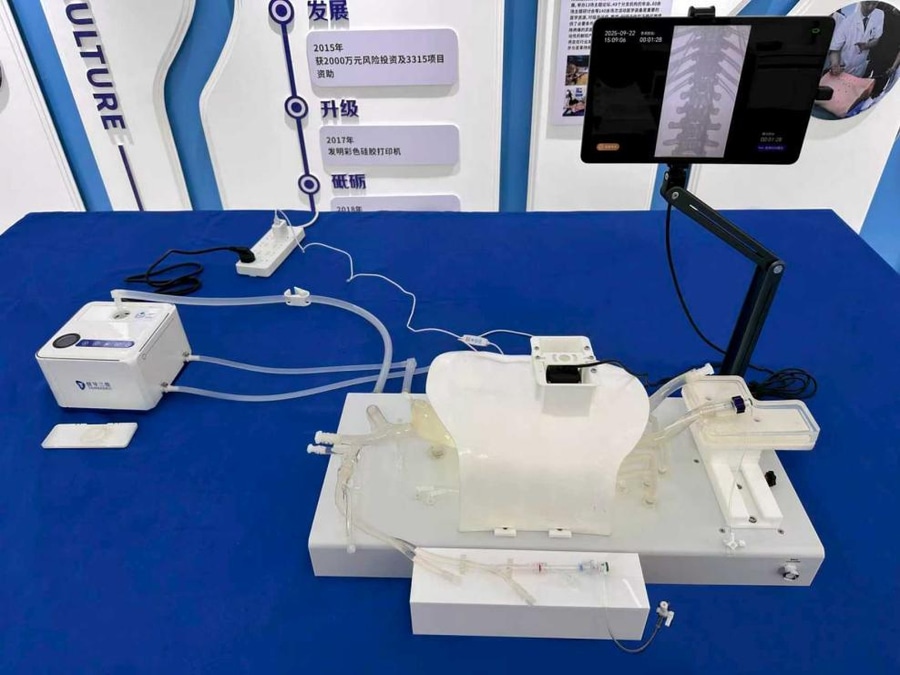
After nearly half a year of dedicated research and development, the Adrenal Venous Sampling (AVS) Training Simulation System, jointly developed by Trando 3D Medical and a leading domestic hospital’s expert medical team, has been officially launched.
This innovative simulation model completely transforms traditional AVS training methods by providing interventional physicians with a safe and realistic practice platform — from beginner learning to advanced procedural mastery.
Four Core Functions Addressing the Key Challenges of AVS Training
1. Highly Realistic Vascular Environment for Complex Anatomical Simulation
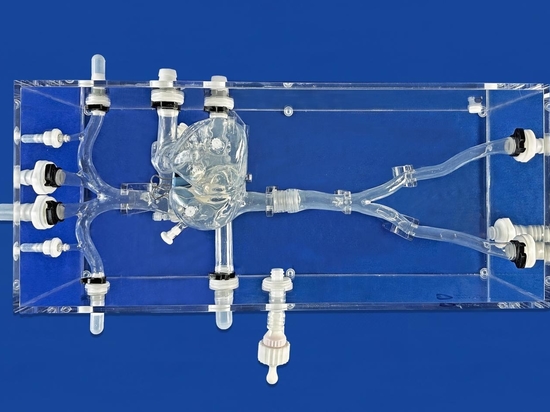
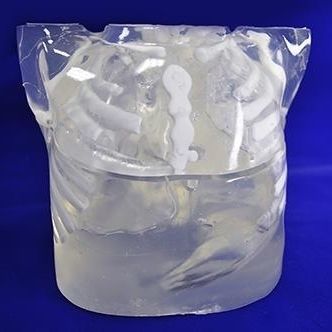
The AVS training model uses specially formulated silicone materials to create venous vessels with realistic inner diameters, elasticity, and tactile feedback, closely replicating human vascular characteristics.
Multiple adrenal vein openings and challenging accessory vessels are innovatively designed within the model to simulate the complex anatomical variations commonly encountered in clinical procedures. This allows operators to practice different scenarios and significantly improves their ability to manage difficult vascular anatomy during real AVS procedures.
2. Integrated Simulated DSA System for “Hand-Eye Coordination” Training
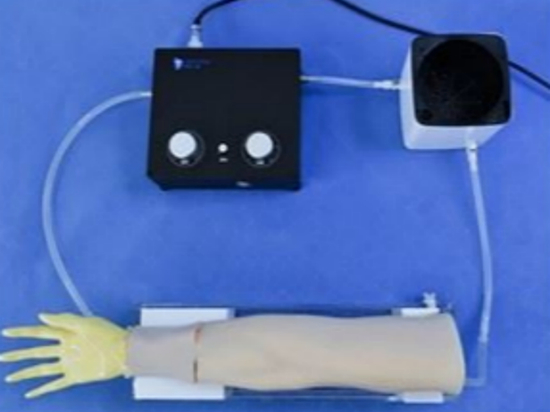
The system integrates a simulated DSA imaging system, allowing trainees to observe catheter movement, vessel navigation, and contrast imaging results in real time through the display.
The training workflow closely follows actual clinical procedures: operators use a foot pedal to control image acquisition and determine whether the catheter has successfully engaged the target adrenal vein based on angiographic images.
After each training session, the system can automatically generate procedural data, providing objective and quantitative evaluation of training performance.
3. Diverse Angiography Modules to Develop Expert Imaging Recognition Skills
The system provides multiple typical angiographic morphology modules designed to train operators to quickly and accurately distinguish target adrenal veins from interfering vessels.
By practicing different angiographic scenarios, trainees can improve their image interpretation skills, which are essential for successful AVS procedures, and develop the ability to make accurate decisions under complex anatomical conditions.
4. Complete Procedure Simulation from Catheter Engagement to Blood Sampling
The AVS training system is more than a simple catheterization model — it is a comprehensive procedural training platform.
Trainees can complete the entire AVS workflow, including pre-procedure preparation, catheter selection, venous engagement, angiographic confirmation, and final blood sampling.
By reproducing the complete clinical process, the system helps operators develop procedural muscle memory, establish systematic surgical thinking, and build confidence before performing AVS procedures in real clinical settings.
Technical Specifications
Model Dimensions: Approximately 700 mm × 320 mm × 180 mm
Packaging: 2-piece package design for convenient transportation and storage
Model Weight: Approximately 6.6 kg
Power Requirements: AC 220V, 50Hz
Benefits for Hospitals and Training Programs
For Hospitals and Training Centers:
Reduce clinical training risks
Establish standardized AVS training procedures
Rapidly develop skilled AVS operators through structured simulation training
For Young Physicians and Trainees:
Practice confidently in a zero-risk environment
Repeat procedures and learn from mistakes
Significantly shorten the learning curve and improve procedural confidence
For Experienced Experts:
Provide a stable and repeatable teaching platform
Efficiently transfer valuable clinical experience to the next generation of physicians
Advancing the Future of AVS Training with Innovation
“To do a good job, one must first sharpen one’s tools.”
The launch of the Trando 3D Medical AVS Training Simulation System represents more than an upgrade of a medical model — it marks a significant advancement in in-vitro simulation technology for clinical training.
By combining professional clinical expertise with advanced engineering and manufacturing capabilities, Trando 3D Medical is committed to supporting the development of precision medicine, helping endocrinologists shorten their learning curve, improve procedural skills, and ultimately benefit more patients.
Contact us at [email protected] to schedule a product demonstration or request more information.
Adrenal Venous Sampling (AVS) Training Model — Trando 3D Medical
Vascular Intervention Simulation Models | Endoscopic Training Solutions
Together, we can open a new chapter in precise and effective AVS training.