#Product Trends
Trandomed Right Heart–Pulmonary Artery Model: A High-Fidelity Platform for Interventional Training and Device Testing
Trandomed Right Heart–Pulmonary Artery Model: A High-Fidelity Platform for Interventional Training and Device Testing
With the rapid advancement of cardiovascular interventional technologies, procedures involving the right heart system and pulmonary arteries require precise anatomical understanding, advanced catheter manipulation skills, and extensive practical experience.
Traditional training methods mainly rely on clinical cases, which are limited by case availability and involve concerns related to patient safety and medical ethics. Trandomed (Trando 3D Medical Technology) integrates medical engineering expertise with advanced 3D reconstruction and manufacturing technologies to develop the Right Heart–Pulmonary Artery Model, providing a realistic platform for clinical training, medical education, and medical device development.
Accurate Anatomical Reconstruction Based on Clinical Imaging Data
The model is developed based on clinical CT imaging data and advanced 3D reconstruction technology. Through precise segmentation, optimization, and manufacturing processes, Trandomed accurately reproduces complex cardiovascular anatomy, including vessel pathways, branching structures, and key anatomical landmarks.
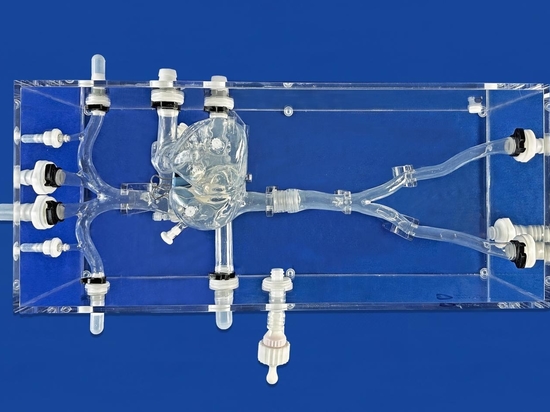
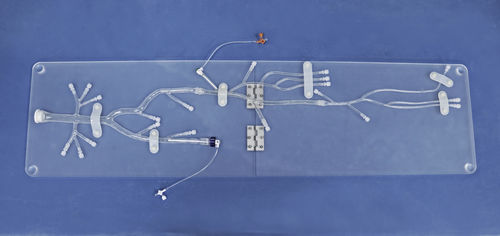
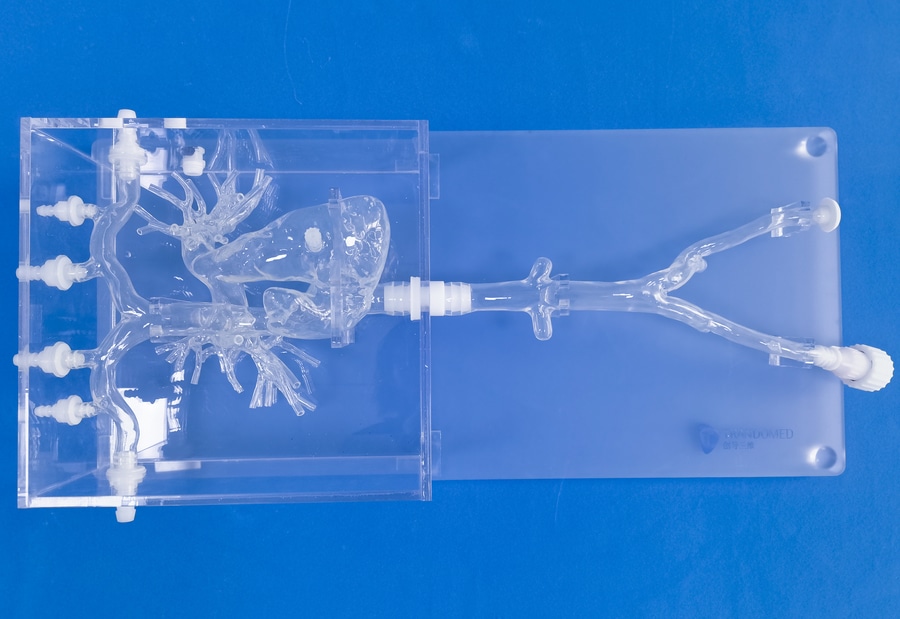
The model includes the femoral vein, iliac vein, inferior vena cava, right atrium, right ventricle, pulmonary artery, and multi-level pulmonary artery branches. The complete access pathway enables simulation of procedures from femoral venous entry to selective pulmonary artery catheterization.
The right heart and pulmonary vascular system present complex three-dimensional anatomical characteristics, including curved vascular pathways, multiple branching structures, and narrow anatomical passages. The model is designed to preserve these key features, helping users develop a better understanding of spatial relationships and procedural challenges encountered in real clinical environments.
This patient-based anatomical reconstruction approach provides high anatomical similarity to clinical conditions while supporting repeated procedural training and device evaluation.
Realistic Material Properties and Visualization Capability
The model is manufactured using high-transparency soft silicone with optimized mechanical properties, providing realistic flexibility and handling feedback similar to vascular tissues.
The transparent structure allows direct observation of guidewires, catheters, balloons, and other interventional devices during operation. This feature helps users better understand the complex three-dimensional anatomy of the right heart system and improve catheter navigation skills.
The silicone material offers excellent durability, tear resistance, and long-term stability, supporting repeated training and testing while maintaining consistent performance.
Complete Right Heart–Pulmonary Artery Interventional Pathway
The model covers the complete route from femoral vein access to pulmonary artery branches. Operators can simulate catheter advancement through the femoral vein, iliac vein, inferior vena cava, right atrium, right ventricle, and pulmonary artery.
The model supports simulation of:
1.Right heart catheterization
2.Pulmonary angiography
3.Pulmonary artery pressure measurement
4.Pulmonary vascular intervention
5.Pulmonary embolism-related procedures, such as aspiration thrombectomy
The multi-level pulmonary artery branches provide anatomical conditions for selective catheterization and advanced interventional training.
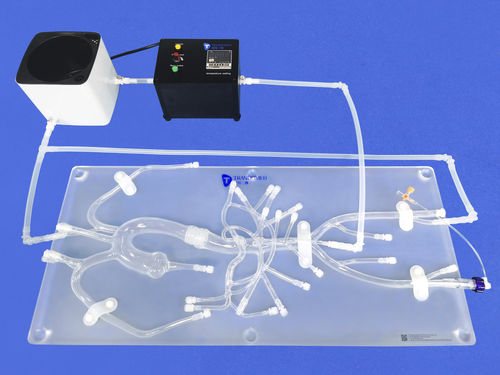
Through modular design, the model can be integrated with pulsatile flow systems to simulate physiological hemodynamic environments. Adjustable flow and pressure parameters enable evaluation of device performance under different conditions, providing additional support for research and development.
Applications in Training and Medical Device Development
For physicians and trainees, the Trandomed Right Heart–Pulmonary Artery Model provides a repeatable and risk-free training environment. Users can practice catheter navigation, anatomical positioning, and procedural techniques before clinical application, improving procedural confidence and reducing the learning curve.
For medical device companies, the model provides a realistic testing platform for evaluating catheters, guidewires, balloons, stents, and other interventional devices. It supports assessment of device deliverability, navigation performance, positioning accuracy, and operational characteristics in an anatomically realistic environment.
The model can be used throughout different stages of device development, from early prototype evaluation to performance verification. By providing a consistent and controllable testing environment, it helps engineers optimize product design and improve development efficiency.
The model also supports imaging-based evaluation, including CT scanning and angiographic procedures, facilitating further analysis and documentation during device testing.
As a professional developer of 3D medical simulation solutions, Trandomed provides high-fidelity anatomical models for cardiovascular, respiratory, digestive, and urological interventions. From medical image processing and 3D reconstruction to silicone molding and final assembly, Trandomed delivers integrated simulation solutions for hospitals, medical schools, and medical device companies worldwide.
The Right Heart–Pulmonary Artery Model represents Trandomed’s commitment to advancing simulation-based medical education and supporting innovation in interventional medicine.